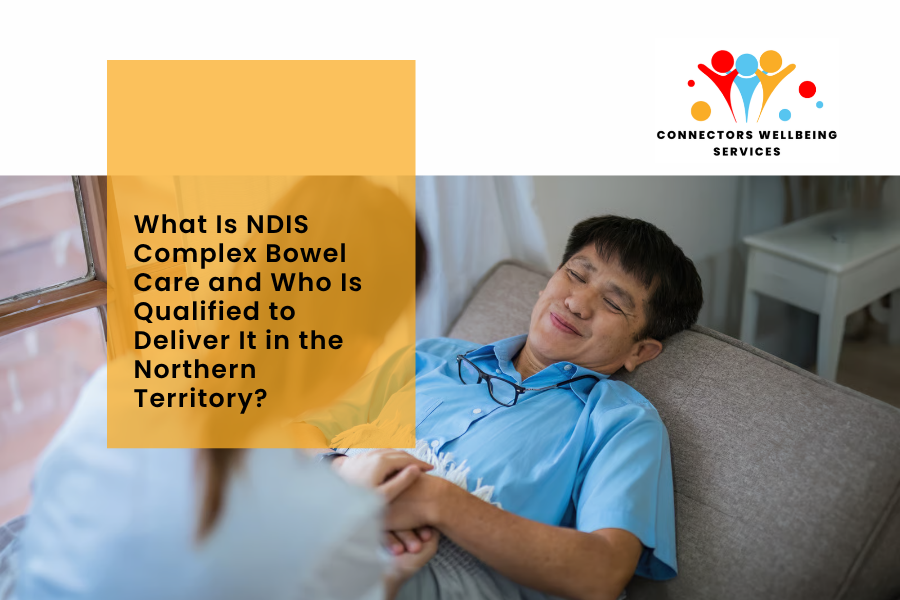
What Is NDIS Complex Bowel Care and Who Is Qualified to Deliver It in the Northern Territory?
Managing complex bowel care can be an important part of daily life for people living with disabilities. With appropriate assistance, participants can receive personal care that supports their comfort, dignity and individual needs.
Complex bowel care NDIS services may involve specialised procedures and routines that require trained workers. Understanding what this support includes and who can deliver it can help participants and their families choose an appropriate provider.
Understanding Complex Bowel Care NDIS
Complex bowel care refers to specialised assistance for people who cannot independently manage certain bowel care activities due to disability or complex health needs. Support is generally provided according to an individualised bowel management plan.
The level of assistance varies between participants. It may include specific bowel routines, personal hygiene, continence support and other procedures outlined in the participant’s care plan.
What Does Complex Bowel Care Include?
The type of assistance provided depends on the participant’s individual requirements and clinical guidance.
1. Bowel Management Plans
A bowel management plan outlines the participant’s routine and the type of assistance required. Workers follow the plan to provide consistent care and identify relevant changes.
2. Manual Evacuation Support
Some participants may require manual evacuation as part of their bowel care routine. This procedure should only be performed by workers with the appropriate training and competency.
3. Continence Care
Support can include assistance with continence products, personal hygiene and other related personal care needs. Workers should maintain the participant’s privacy and dignity throughout the process.
4. Bowel Monitoring
Recording bowel movements and relevant changes helps maintain accurate care records. This information can also be shared with the appropriate healthcare professionals when required.
5. Hygiene and Infection Control
Good hygiene and infection-control practices are essential during personal bowel care. Trained workers should follow appropriate procedures to help maintain a safe care environment.
Who Can Provide Complex Bowel Care in the NT?
Complex bowel care should be delivered by workers who have suitable training, knowledge and competency for the specific support required. They should understand the participant’s care plan and follow the procedures outlined by the relevant healthcare professionals.
When choosing a provider, participants can ask about worker training, experience, supervision and how care records are maintained.
What to Look for in a Bowel Care NDIS Trained Worker
Choosing the right worker is important for safe and consistent personal care.
Relevant Training
Workers should have training that matches the participant’s specific bowel care requirements and the procedures they are expected to perform.
Care Plan Knowledge
The worker should understand the participant’s bowel management plan and follow the recommended routine consistently.
Safe Care Practices
Appropriate hygiene, infection control and documentation should form part of the care process.
Respectful Support
Bowel care is personal, so workers should communicate respectfully and protect the participant’s privacy, dignity and choices.
Appropriate Communication
Workers should know how to report changes or concerns and communicate relevant information to the appropriate healthcare professionals.
Complex Bowel Management Disability Support in Darwin
People requiring complex bowel management disability support in Darwin may need regular assistance at home or in another suitable setting. Consistent care can make daily routines easier to manage while supporting participant comfort and independence.
The right provider should understand the participant’s individual requirements and work according to their established care plan.
High Intensity Bowel Care NDIS NT
Some complex bowel care procedures require specialised skills and are considered high-intensity support. Workers providing this type of assistance need appropriate training and competency for the procedures involved.
For high intensity bowel care NDIS NT, participants should look for a provider that can demonstrate relevant worker training, clear care processes and appropriate clinical coordination.
NDIS Bowel Program Darwin Support
A NDIS bowel program in Darwin service can help participants maintain their established bowel care routines with appropriate assistance. Support may include personal care, bowel monitoring, hygiene and documentation.
A consistent approach can also make it easier to identify changes and communicate relevant concerns to the participant’s healthcare team.
Why Choose Connectors Wellbeing for Complex Bowel Care?
Connectors Wellbeing provides complex bowel care support in Darwin with a focus on individual needs, safety and respectful personal care. Its approach is designed to help participants receive appropriate assistance while maintaining their dignity and independence.
Trained workers
Individualised support
Respectful care
Professional coordination
Consistent assistance
Final Thoughts
Complex bowel care can involve sensitive and specialised support that requires appropriate training and careful planning. Choosing a suitably qualified worker can help participants receive safe and respectful assistance.
For people seeking complex bowel care NDIS support in Darwin and the Northern Territory, consider the provider’s training, experience, care processes and approach to individual needs before making a decision.
FAQs About Complex Bowel Care NDIS
1. Is complex bowel care considered high-intensity support?
Some complex bowel care procedures require specialised skills and training and may fall within high-intensity support. The type of assistance required depends on the participant’s individual needs and care plan.
2. Can a support worker provide manual evacuation?
A worker may provide manual evacuation when they have the required training and competency and the procedure forms part of the participant’s approved care plan and relevant clinical guidance.
3. Can complex bowel care be provided at home?
Yes. Complex bowel care can be provided in a participant’s home when the service is appropriate and delivered by a suitably trained worker according to the participant’s care plan.
4. What training should a bowel care worker have?
Training should match the participant’s specific bowel care requirements and the procedures the worker needs to perform. Providers should be able to explain their worker training and competency processes.
5. How do I choose a bowel care provider in Darwin?
Consider the provider’s relevant training, experience, care planning, documentation practices and ability to coordinate with healthcare professionals. A respectful, participant-centred approach is also important for personal care.