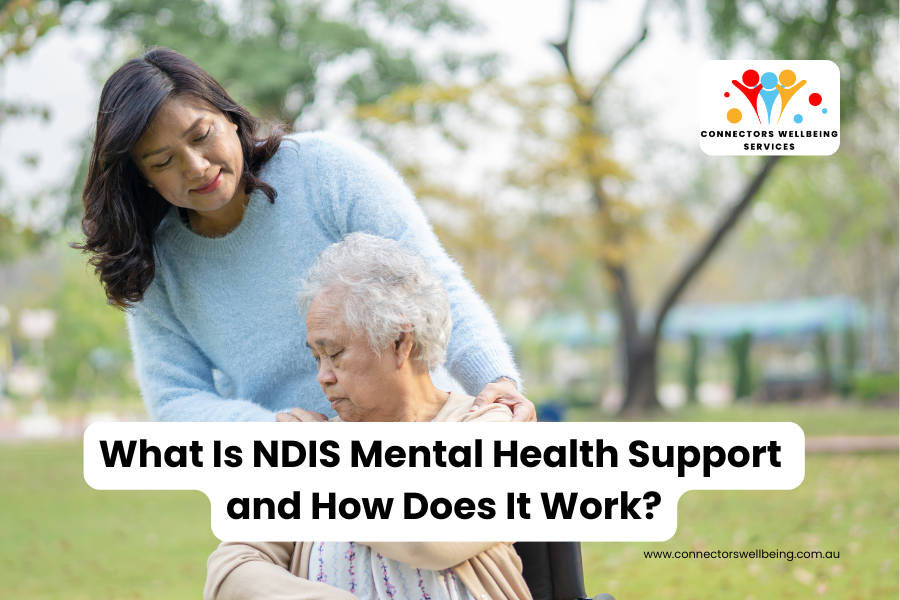
NDIS Mental Health Support helping a person with daily activities

Table of Contents

What Is NDIS Mental Health Support and How Does It Work

Mental health conditions render everyday life extremely difficult. Any simple activity such as cooking, cleaning or going out might seem challenging. NDIS Mental Health Support is a service that assists people to have a more independent lifestyle, better wellbeing, and continued connection with their family, friends, and community.

What Is NDIS Mental Health Support?

Due to a mental illness mental disability, life has a way of being more difficult than it needs to be. Cooking, shopping or getting ready in the morning is a chore to some as well. That’s where NDIS Mental Health Support comes in

The National Disability Insurance Scheme (NDIS) isn’t just about physical disability. It also appreciates the effects of severe mental disorders and its chronic conditions. The support is designed to reduce barriers, give people access to the right ndis services, and ultimately help them live with more independence, confidence, and stability.

Understanding Psychosocial Disability in the NDIS

Talking about mental health, the NDIS refers to the concept of psychosocial disability. It is just the manner that a mental health problem influences the capacity of the user to participate in the daily livelihood.

It is never a matter of the diagnosis but the effect. An individual suffering bipolar disorder may not find consistent work and somebody with severe anxiety may not even leave the house. Such obstacles may result in isolation, stress and loss of independence. ndis support services aim to address those barriers directly and provide pathways back into community life.

Who Can Access NDIS Mental Health Services?

Not everyone with a mental disability will qualify for the NDIS. To be eligible, you need to:
  • Be under the age of 65
  • Live in Australia
  • Have a mental illness mental disability that is ongoing, or likely to be permanent
  • Show that this condition has a big effect on your everyday life
Importantly, it is not sufficient to have the diagnosis. You’ll need medical evidence, often from a doctor, psychologist, or psychiatrist, showing how your condition makes daily activities difficult. This means that ndis support services are directed to individuals who require long-term, and continuous support and not short-term.

Types of NDIS Mental Health Supports Available

NDIS Mental Health Support is not “one size fits all.” The services are flexible and tailored to what each person actually needs. Common examples include:

  • Recovery coaching: working with a coach to set goals, manage challenges, and rebuild independence
  • Therapy and counselling: professional support to improve mental health supports and develop coping skills
  • Personal care: help with showering, grooming, or preparing meals
  • Skill development: learning practical skills like budgeting, communication, or time management
  • Community participation: support to attend social activities or join community groups
Each plan is built around the individual’s goals, whether that’s becoming more independent at home, feeling confident in social situations, or preparing for work or study.

How NDIS Support Services Work

The journey starts with an Access Request Form, which includes medical evidence of your condition. If approved, you’ll work with an NDIS planner to create a personalised plan.
This plan sets out your goals, maybe learning new skills, improving social connections, or managing personal care, and matches you with ndis support services to get there. The great thing about the NDIS is its flexibility. Plans can be reviewed and updated as your situation changes, so the support always stays relevant.

The Role of NDIS Psychology and Counselling

NDIS psychology and counselling is one of the most useful supports of NDIS. Through such services, people receive a non-threatening situation to share and acquire skills on how to cope as well as to become resilient.
Psychologists can provide evidence-based therapy solutions to help treat anxiety or depression, including CBT. The counsellor could be more inclined to the emotional side of things, also being a listener and guiding another person through people issues. In unison, they would be able to make the participants feel less alone, enabled to deal with stress and more confident in their day-to-day life.

Benefits of NDIS Mental Health Support

The benefits go far beyond the practical help. Yes, the NDIS can cover personal care and therapy, but it also gives people the chance to reconnect with life.
With the right mental health supports in place, members not only become independent but also report being less lonely and even beginning new journeys such as resuming their studies, adopting some hobbies or joining the workplace.
Probably the greatest gain is confidence. Knowing that you have consistent NDIS Mental Health Support can reduce anxiety and help you believe in your own abilities again.

Choosing the Right NDIS Support Services

Having funding is only part of the story. Choosing the right provider makes a huge difference to how effective the support feels.

At Connectors Wellbeing – Disability Services Darwin NDIS Support, we help participants find ndis services that truly match their needs. Our role is to guide people through the system, make the process less stressful, and connect them with supports that actually improve quality of life. The focus is always on building independence, wellbeing, and trust.

How NDIS Supports People with Serious Mental Illness

The NDIS is especially important for people living with serious mental illness, including schizophrenia, PTSD, OCD, or even bipolar disorder. Such conditions tend to impact much of life such as work, relationships, health, and relations within the community.
The NDIS doesn’t just look at the medical diagnosis. Instead, it considers how illness limits daily function. For someone who can’t manage personal care without help, or who feels unsafe leaving home alone, the ndis support services provide long-term support to make those challenges manageable. This practical focus ensures people with the greatest needs receive the help they deserve.

Conclusion: Why NDIS Mental Health Support Matters

Mental health conditions can make life unpredictable, but the right support can change everything. NDIS Mental Health Support is not just a source of finance it is a chance at learning new skills and reconnecting with life and independence.

At Connectors Wellbeing – Disability Services Darwin NDIS Support, we understand that it can seem daunting, but you need not go it alone. Quality counseling can lead you to mental health support that will allow you to live without fear of being able to live safely, steadily, and hopeful of the future.
Now is the time to consider using the NDIS to support you or somebody else in your life that lives with a psychosocial disability. There is help and it may even change everything.

Leave a Reply

Your email address will not be published. Required fields are marked *