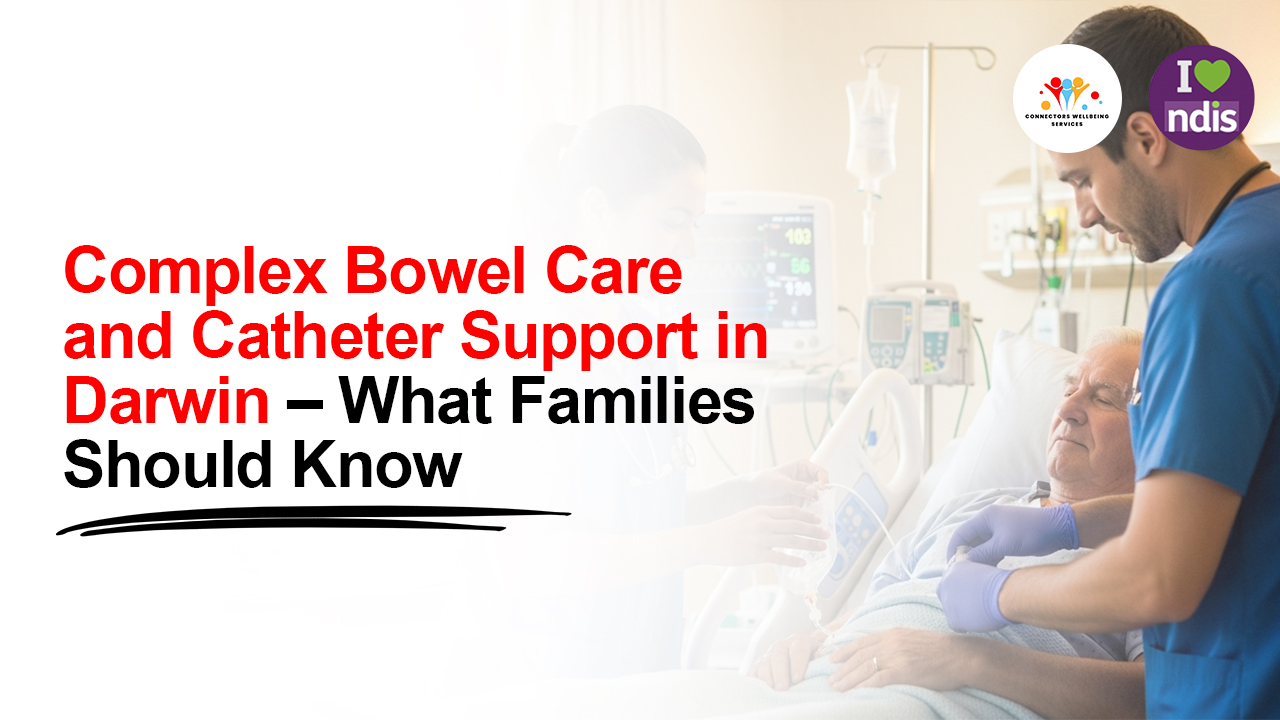
Complex bowel care in Darwin is a reality for many families supporting loved ones at home. When medical needs like bowel management or catheter care become part of daily life, it can quickly feel overwhelming.
Am I doing this correctly? What if something goes wrong? How do we prevent infections or complications?
If you’re in Darwin or the Northern Territory, you’re not alone. Many families face these questions, and with the right support, complex care at home can be safe, comfortable, and manageable.
This guide explains what complex bowel care and catheter support involve, who needs it, and how professional support under the NDIS can make life easier for both participants and families.
What Is Complex Bowel Care? (NDIS Nursing Support Darwin)
Complex bowel care refers to specialised procedures used when a person cannot manage bowel movements independently due to disability, neurological conditions, or chronic illness.
This may include:
- Suppositories or enemas
- Digital stimulation or manual evacuation
- Stoma care (colostomy or ileostomy)
- Bowel management programs
- Monitoring for constipation, impaction, or leakage
These procedures require trained support workers or nurses to ensure dignity, hygiene, and safety.
Why Professional Support is Important
Improper bowel care can lead to:
- Severe constipation or impaction
- Bowel damage
- Infections
- Pain and discomfort
- Emergency hospital visits
With trained NDIS providers in Darwin, bowel care becomes a structured, respectful routine rather than a stressful daily challenge.
Understanding Catheter Support at Home in Darwin
Catheter care involves managing a tube that drains urine from the bladder. Many NDIS participants rely on catheters due to spinal injuries, neurological conditions, or mobility limitations.
Professional catheter support may include:
- Insertion and removal (where clinically required)
- Catheter bag changes
- Hygiene and infection prevention
- Monitoring urine output and colour
- Identifying early signs of urinary tract infections (UTIs)
- Education for participants and family members
Did you know? UTIs are one of the most common complications for people with long-term catheters. Proper care significantly reduces this risk.
A Story: How Support Changed Everything
When Sarah’s father returned home after a stroke, the family was determined to care for him themselves. But his catheter and bowel care needs quickly became overwhelming.
“We were scared of hurting him,” Sarah shared. “Every day felt stressful. We barely slept because we were worried something would go wrong.”
After connecting with a local NDIS provider for nursing support in Darwin, everything changed.
A trained nurse:
- Set up a clear care routine
- Educated the family
- Monitored for complications
- Gave the family confidence
“Now we can focus on spending time with him instead of worrying all the time,” Sarah said.
Signs Your Loved One May Need Complex Care Support
If you’re unsure whether professional help is needed, ask yourself:
- Are bowel or bladder routines difficult to manage safely?
- Have there been repeated infections or complications?
- Do you feel anxious or unsure during care tasks?
- Is the current routine affecting your family’s wellbeing?
If you answered yes to any of these, professional support could make a significant difference.
Question for you: Are you providing medical-level care at home without formal training?
Where to Access Complex Care Services in the Northern Territory
Under the NDIS, participants may receive funding for:
- Community nursing
- High-intensity daily personal activities
- Clinical care at home
- Training for family and carers
Services are typically delivered:
- In the participant’s home
- Supported accommodation settings
- Community environments where needed
In Darwin and across the NT, qualified providers ensure care is delivered according to clinical standards while maintaining dignity and independence.
FAQ: Complex Bowel and Catheter Care (Darwin & NT)
- Can support workers provide bowel and catheter care?
Yes, if they are trained and the care falls within NDIS high-intensity support guidelines.
- Is this covered by the NDIS?
In many cases, yes. Funding may be included under Core Supports or Capacity Building, depending on the participant’s plan.
- Will families be trained too?
Absolutely. Education and confidence-building are a key part of quality care.
- Does care have to happen daily?
It depends on the individual’s clinical needs. Support can be scheduled based on medical advice.
Why Families in Darwin Choose Professional Complex Care Support
The benefits go beyond medical safety:
- Reduced stress for families
- Greater dignity for participants
- Fewer hospital visits
- Consistent routines
- Improved quality of life
Most importantly, it allows families to return to their role as loved ones, not full-time medical caregivers.
Need Support with Complex Care in Darwin?
If your loved one requires complex bowel care or catheter support, you don’t have to manage it alone.
Connect with a trusted provider who understands the unique needs of families across Darwin and the Northern Territory.
Get in touch with Connectors Well-being today to learn how professional, compassionate care can support your family and improve everyday life.